The best products speak to a user directly through their design, without ever needing to use words.
For robots, this conversation starts with the embodiment: the form of its bodily limbs and sensors. A user maps that onto the closest familiar shape, whether a creature, an object, or even a person, creating their first mental model of the robot.
That’s why embodiment is actually the first product decision made about a robot. Chosen thoughtfully, the embodiment aligns the user’s expectations with product reality. Chosen poorly, the robot is doomed to either over-promise or under-excite.
Why a goose?
We chose an embodiment that answers two of a user’s most important questions with promises we can keep:
1. What can it do?
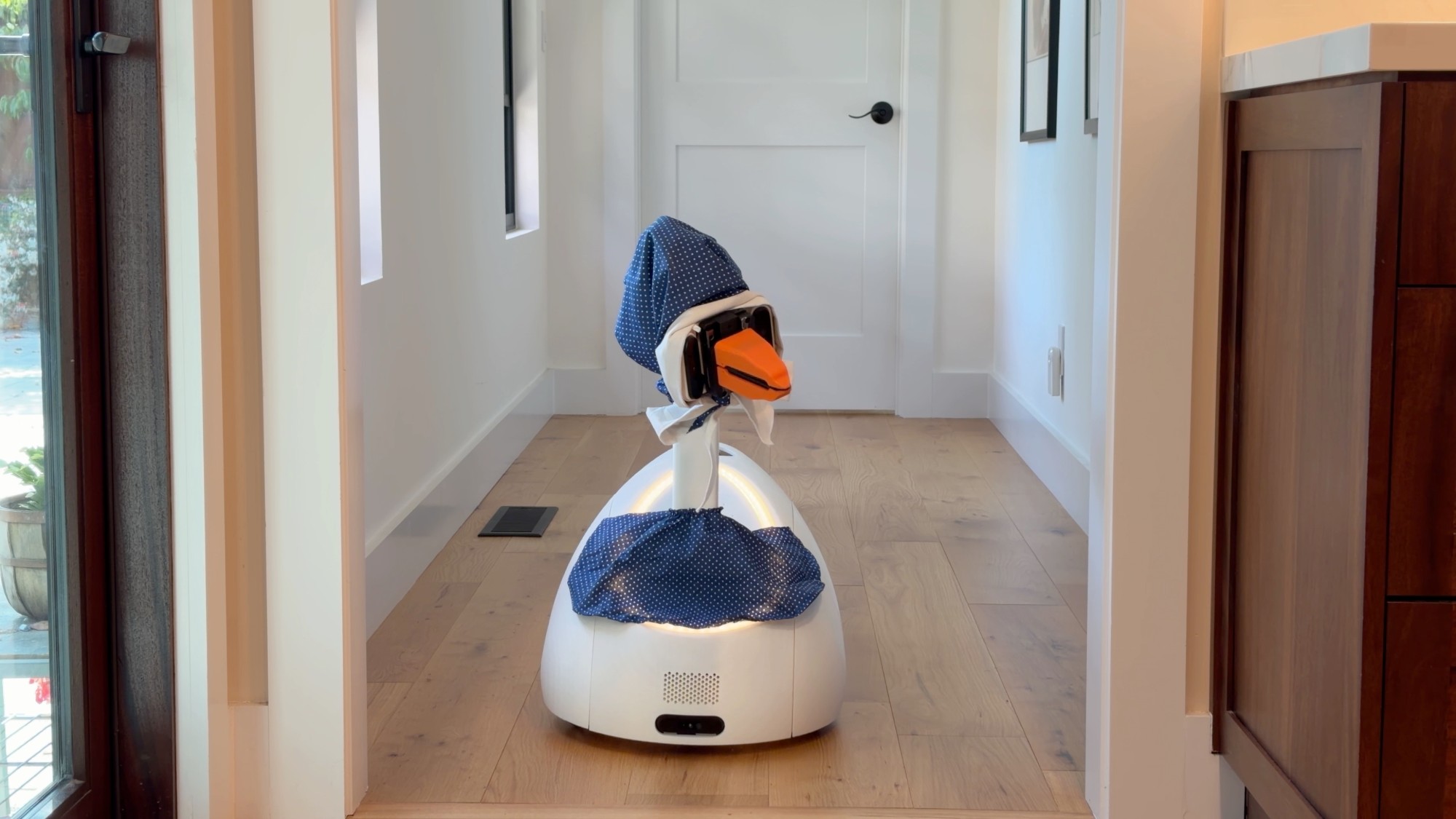
A short goose with no hands looks like it can tidy and pick things up off the ground, and that’s exciting stuff already. Nobody expects it to cook them a meal, so when it does something you wouldn’t expect, like open a door, it’s delightful. When a humanoid opens a door, it’s table stakes.
2. What is it looking at?
A long, curved neck and bright orange beak always make it clear where the goose is pointing its cameras. That’s body language that tells a user when the goose is keeping an eye on the young child next to it. The bonnet has a purpose too, communicating the field-of-view of the camera-eyes. Because unlike a screen display with “eyes”, if you can’t see the goose’s eyes, it can’t see you.
While embodiment is the first product decision, it’s certainly not the last. We’re inventing this craft as we build alongside our earliest supporters. If that sounds like you, we want to hear from you at info@therobotworks.ai.