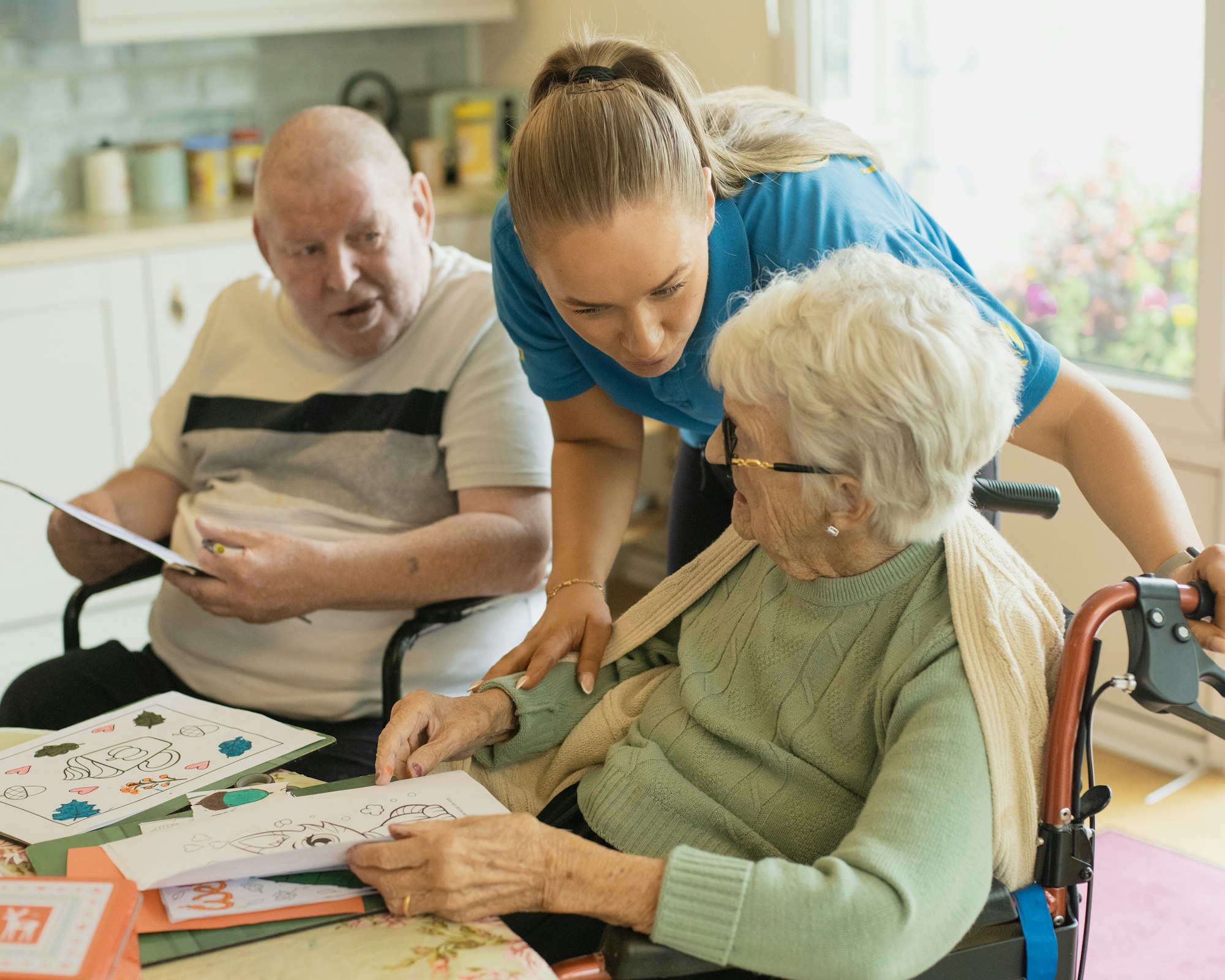
For assisted living
Help that's there
before they ask.
Most falls happen in the moments residents handle on their own. We're studying an investigational in-home assistive robot that's in the room for those moments.
22%
of residential-care residents had a fall in just the prior 90 days — 175,000 residents nationally.
Nearly a quarter of residents, in three months. Each one is an incident report, a family call, and — often — the start of a move to higher care.

The falls aren't happening where your staff are. That's the point.
62.8% of falls happen in the resident's room. And when researchers analyzed falls captured on video in long-term care, the single largest cause — 41% — was incorrect weight shifting: the body's own transfer moments, standing up, sitting down, turning. The room you can't staff, in the moment nobody sees, between rounds and overnight.
Retrospective analysis of falls across levels of care in retirement facilities, Canadian Journal of Aging, 2024 · Robinovitch et al., The Lancet, 2013
Residents know when they need help. Asking is the hard part.
Most residents understand their limits. But the call light asks them to admit those limits — press the button, wait, be the bother. So they transfer themselves. They make the bathroom trip on their own. The falls aren't happening because residents don't know better; they're happening because the safe option costs them something the unsafe option doesn't.
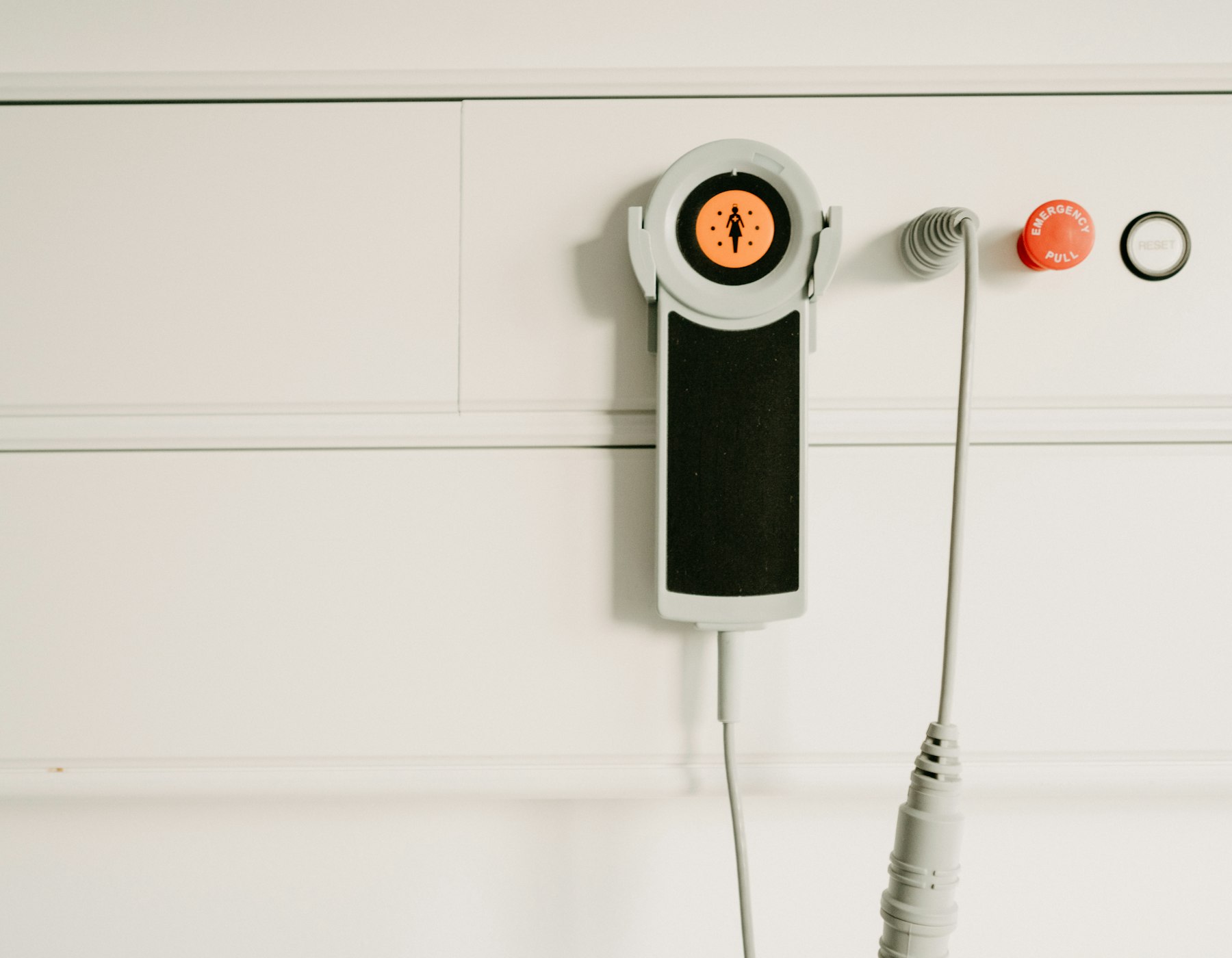
The robot removes the asking.
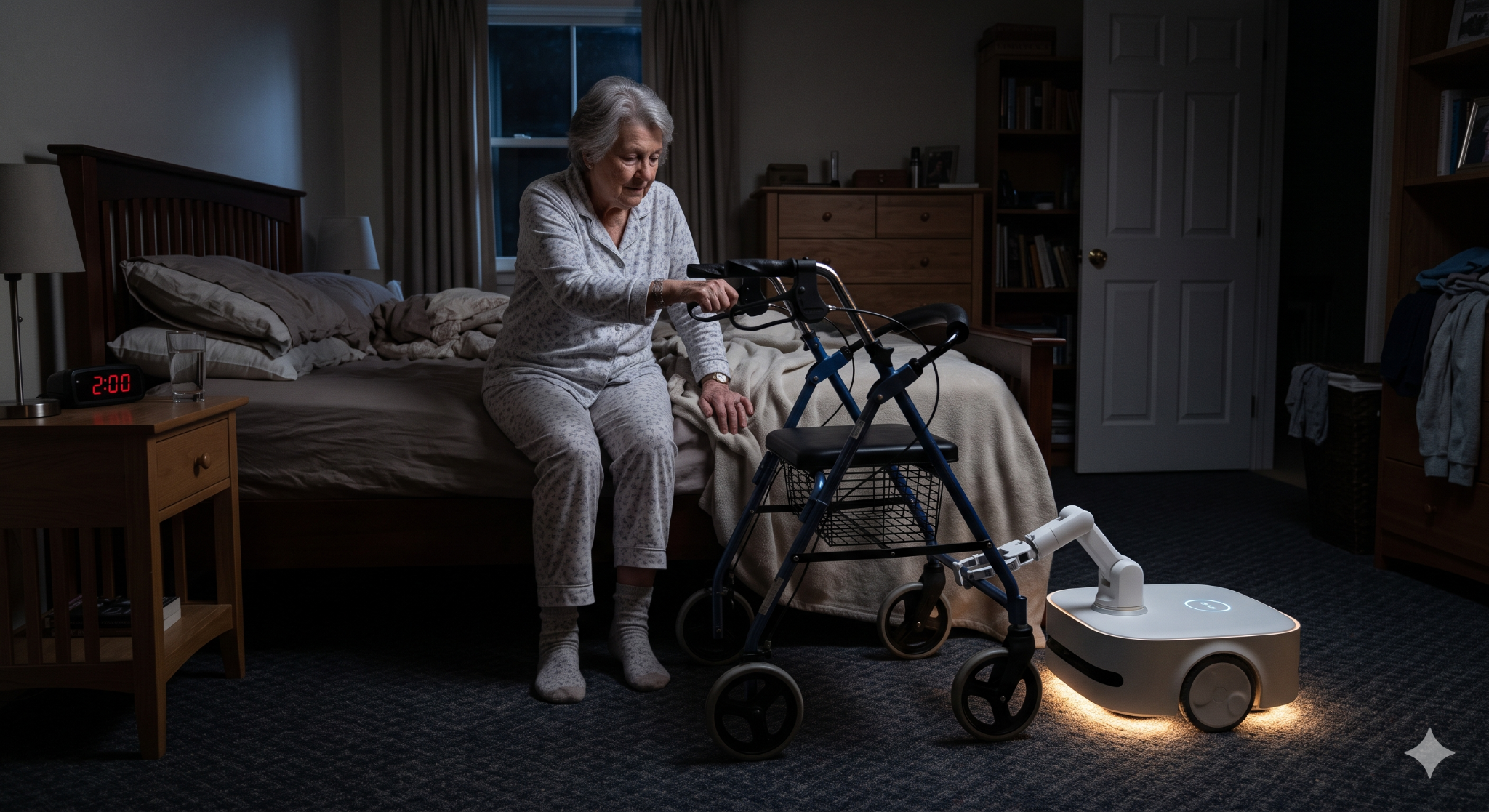
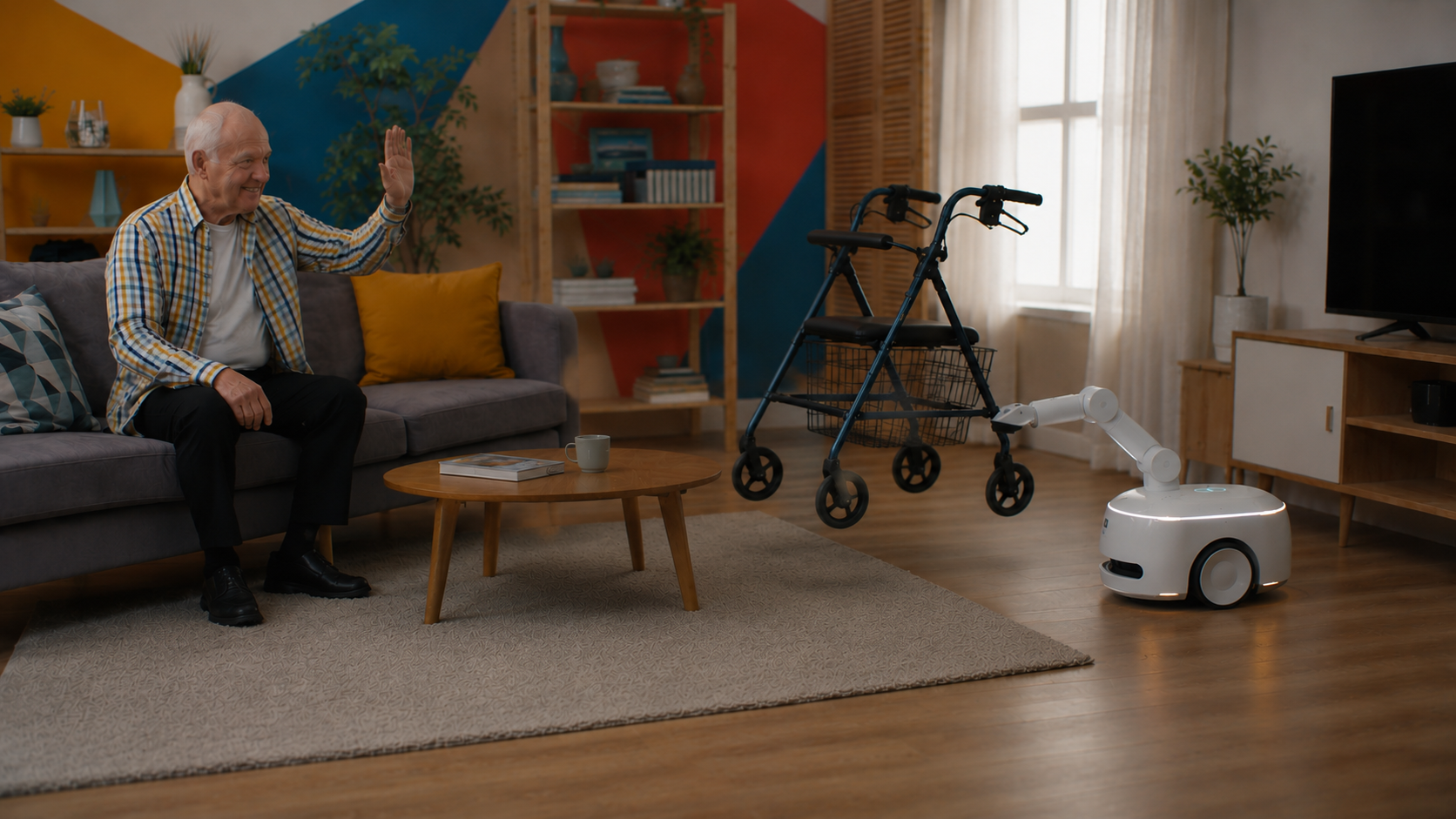
In the study, the robot keeps the walker at hand all day and waiting by the bed at night, lights the path, and prompts a moment of steadying at rising. When a resident leaves the bed, your staff can know; if a fall happens, they know immediately. The resident never has to press anything, ask anyone, or wait — and your team is called only when hands are needed.
- Walker at hand, day and night
- Path lit automatically
- A steady-first prompt at rising
- Bed-exit notice and fall detection, alerts straight to staff
- No cameras that see the resident — depth sensors only
The hours you can't staff are the hours falls favor — overnight and between rounds, the robot covers them without a hire, and without waking anyone who doesn't need waking.
The first fall is the loudest warning you'll get.
A resident who has fallen once is the resident most likely to fall again. Today the standard response is a care-plan note and more frequent checks. The study gives you a concrete one: presence in the room, at the moments that produce the next fall.
The design-partner study
A research study, shaped by your building.
We're assembling a small group of assisted-living communities as design partners in a research study, designed with a university research partner for the National Institute on Aging's small-business research program. Design partners shape what the robot becomes — what it does on your floors, how it alerts your staff, what a night's report looks like — and what changes is measured against your own fall logs and incident reports.
Mobility metrics
The numbers a clinic visit can't catch.
A mobility assessment in a clinic is a snapshot — one walk, on a good day, under observation. In the study, the robot measures the real thing every day: the time from bed to the bedroom door, the round-trip time of a 2am bathroom trip, walking speed along the usual routes. The segments are configurable, and the trends build quietly in the background.
Bed to door
Time from rising to reaching the bedroom door.
Bathroom round trip
Door to door on the 2am trip — the one nobody else sees.
Time to answer the door
From the knock to the open door.
Walking speed
Pace along usual routes, measured passively — no test, no stopwatch.
Sit to stand
How long rising takes, and how it trends.
The robot measures; your clinical team interprets. A slowing week might mean a physical-therapy referral or a medication review; a sustained one gives your team the trend to know — and justify — when it's time for a higher level of care. That judgment stays with your team, with objective numbers under it. Your wellness team sets the segments and the thresholds that matter in your building.
Shared only with the resident's consent.
Why these numbers matter: in pooled cohort data, gait speed alone predicted survival in older adults as accurately as combined measures of age, sex, mobility aids, and self-reported function. Studenski et al., JAMA 2011
Apply to be a design partner.
A 30-minute call with a founder — your fall numbers, the study design, and whether your building fits.