The Goose · The home safety assistant
Your walker, exactly where you need it.
Never in the way.
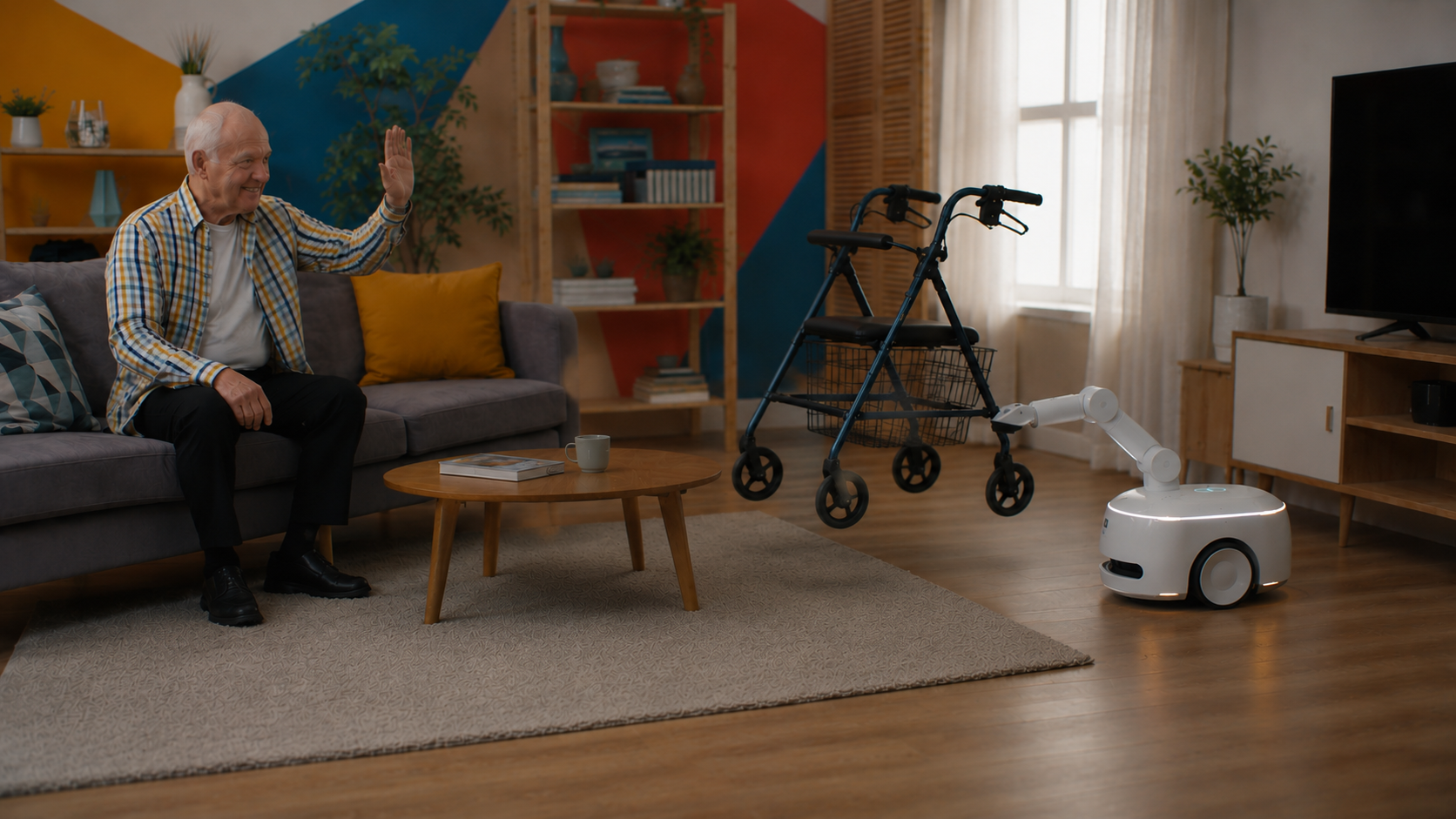
The Goose keeps your walker where you need it, lights the path at night, and calls for help if you fall.
Built by alumni from




How it works
The Goose works alongside you — room to room, all day.
Stays with you
Moves with you from room to room so the walker is always nearby.
Parks out of the way
When you sit to eat or relax, it parks about five feet away — close enough to reach, far enough to stay out of the way.
Returns on a gesture
A simple wave brings the walker back; another sends it away. No app, no voice command, no buttons.
Tidies and charges itself
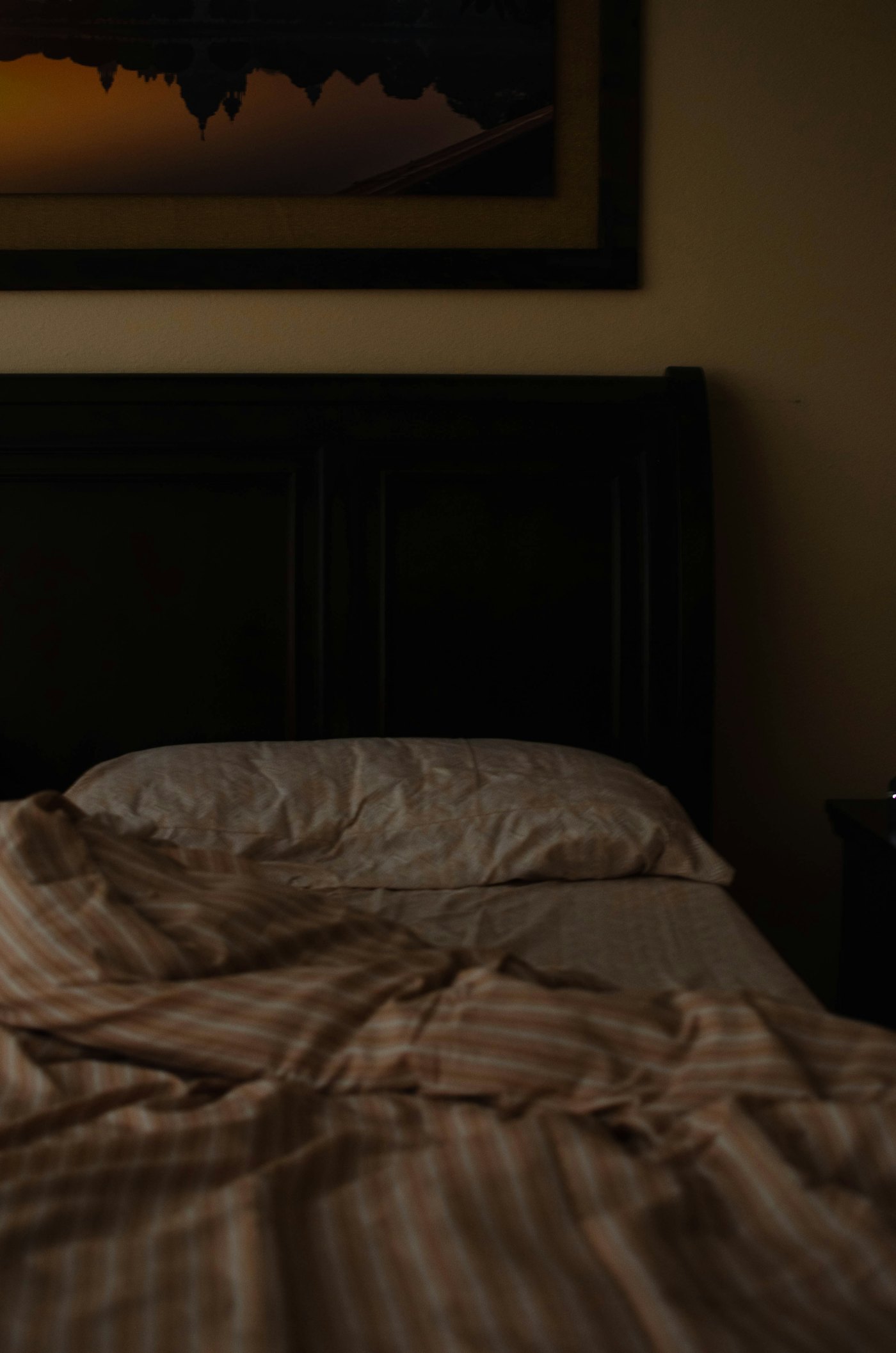
At the end of the day it returns to its dock, charges, and sets the walker within reach of your bed.
Notices a fall
If the Goose detects a fall, it alerts the people you've chosen right away, so no one is left waiting to be found.
The bathroom check-in
While you're in the bathroom, the Goose waits outside the door — it never follows you in. If you're in longer than usual, it asks if you're okay; if you don't answer, it calls the people you've chosen.
Flags trip hazards
It notices clutter in your regular paths and flags it in the app, so you or a family member can clear it. About 1 in 4 older-adult homes has clutter or a tripping hazard on a walking path.
The nighttime routine
The most dangerous trip of the day is the one nobody sees.
Before you sleep, the Goose places the walker beside you — right where you'll reach for it. When it senses you rising, it asks you to pause and steady first, then lights the path to the bathroom. While you're in there, it waits outside the door — it never follows you in. If you're in longer than usual, it asks if you're okay; if you don't answer, it calls the people you've chosen. The goal is simple: you never have to think about where the walker is, even at 2am.
~2.4×
Bathroom falls are about 2.4× more likely to injure — nearly 1 in 4 falls serious enough to need an ER.
30–50%
of older-adult falls involve environmental hazards — poor lighting among them.
~28%
of adults 65+ have initial orthostatic hypotension — a blood-pressure drop in the first 15 seconds after standing, tied to falls even without warning symptoms. It's why the Goose asks you to pause first.
Waitlist families get purchasing priority at launch.
Join the 2027 waitlist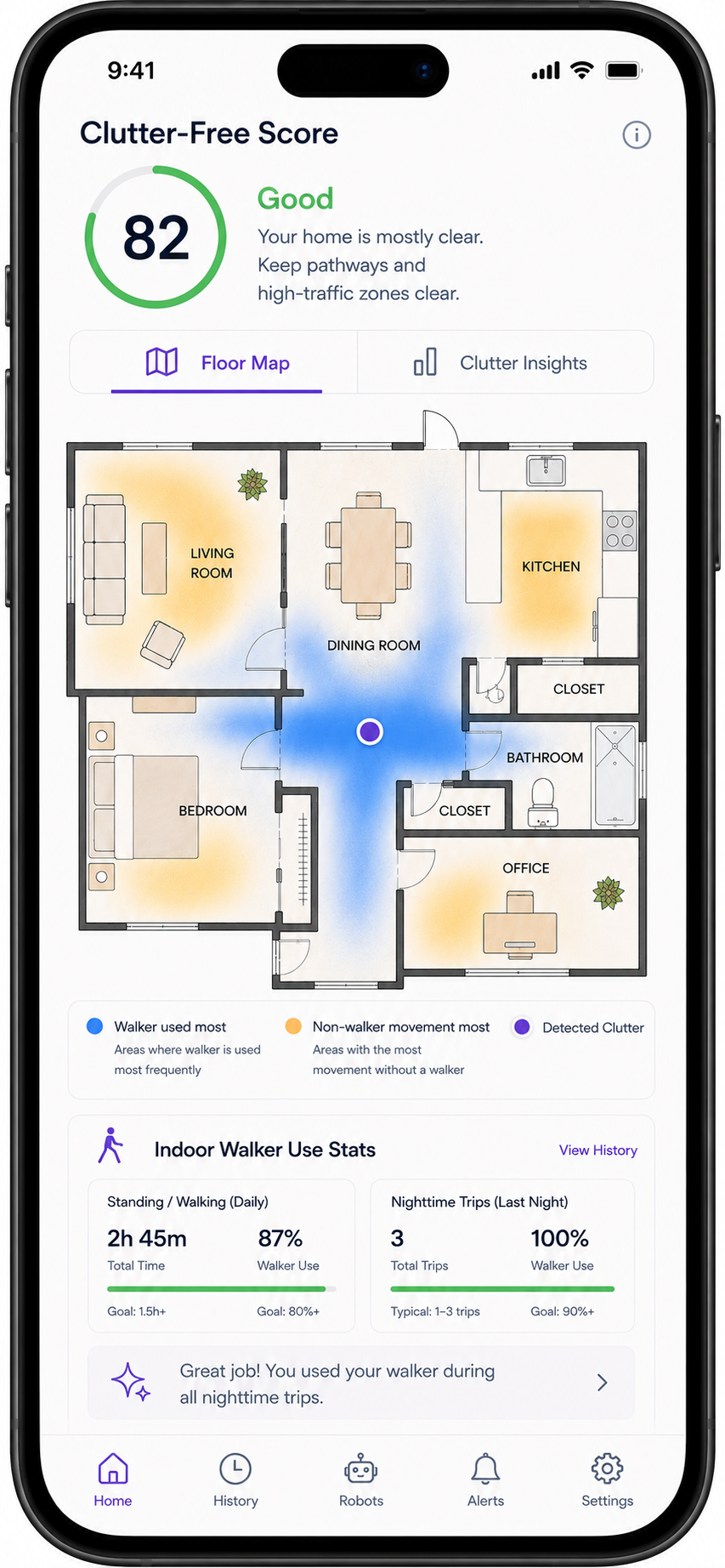
The app
The full picture, without the daily check-in call.
The companion app gives a short daily update (how the night went, whether the walker was used), walker-use consistency over time — including the middle-of-the-night trips that matter most — floor-clutter trends, changes in nighttime habits, and an instant alert if a fall is detected. You and your family see the same picture, and nothing is tracked behind your back.
What makes it different
An assistant that works alongside you — never a replacement.
The Goose doesn't monitor you, decide for you, or report to your family without your knowledge. It stays in the background. You stay in the foreground. And it's honest about what it isn't: it doesn't do hands-on care — no bathing, dressing, or lifting. That's the point. It's the watchful part of what an overnight aide does, without the cost or a stranger in your home.
- Works without Wi-Fi
- Does the watching, not hands-on care
What the Goose actually reduces
Not "fall prevention." Specific risks, honestly.
The Goose doesn't claim to stop every fall. It takes on several of the leading fall risks directly — and if a fall still happens, it cuts the harm.
| Leading risk | What the Goose does |
|---|---|
| Clutter on your paths | Flags it in the app so it gets cleared |
| A dark path at night | Lights the bed-to-bathroom path automatically |
| Dizziness on standing | Prompts you to pause and steady before you walk |
| The walker left behind | Keeps it at hand and ready, every time |
| A long time in the bathroom | Waits outside the door; if you're in longer than usual, it asks if you're okay and calls the people you choose if you don't answer |
| A fall that still happens | Detects it and alerts the people you choose |
Strength, medications, and vision belong to your PT, pharmacist, and eye doctor — the Goose works alongside them, not instead of them. Full breakdown: What actually causes falls →
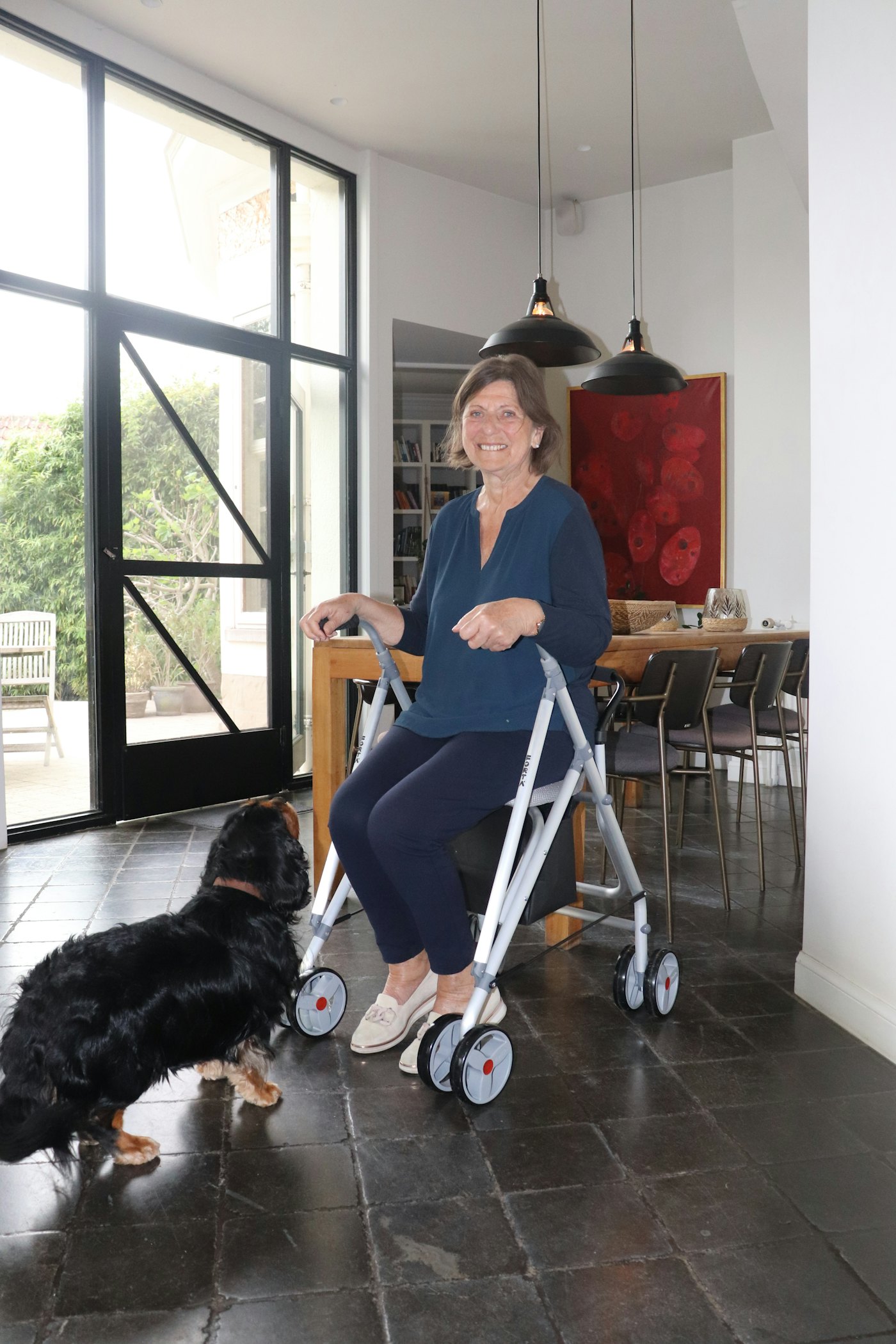
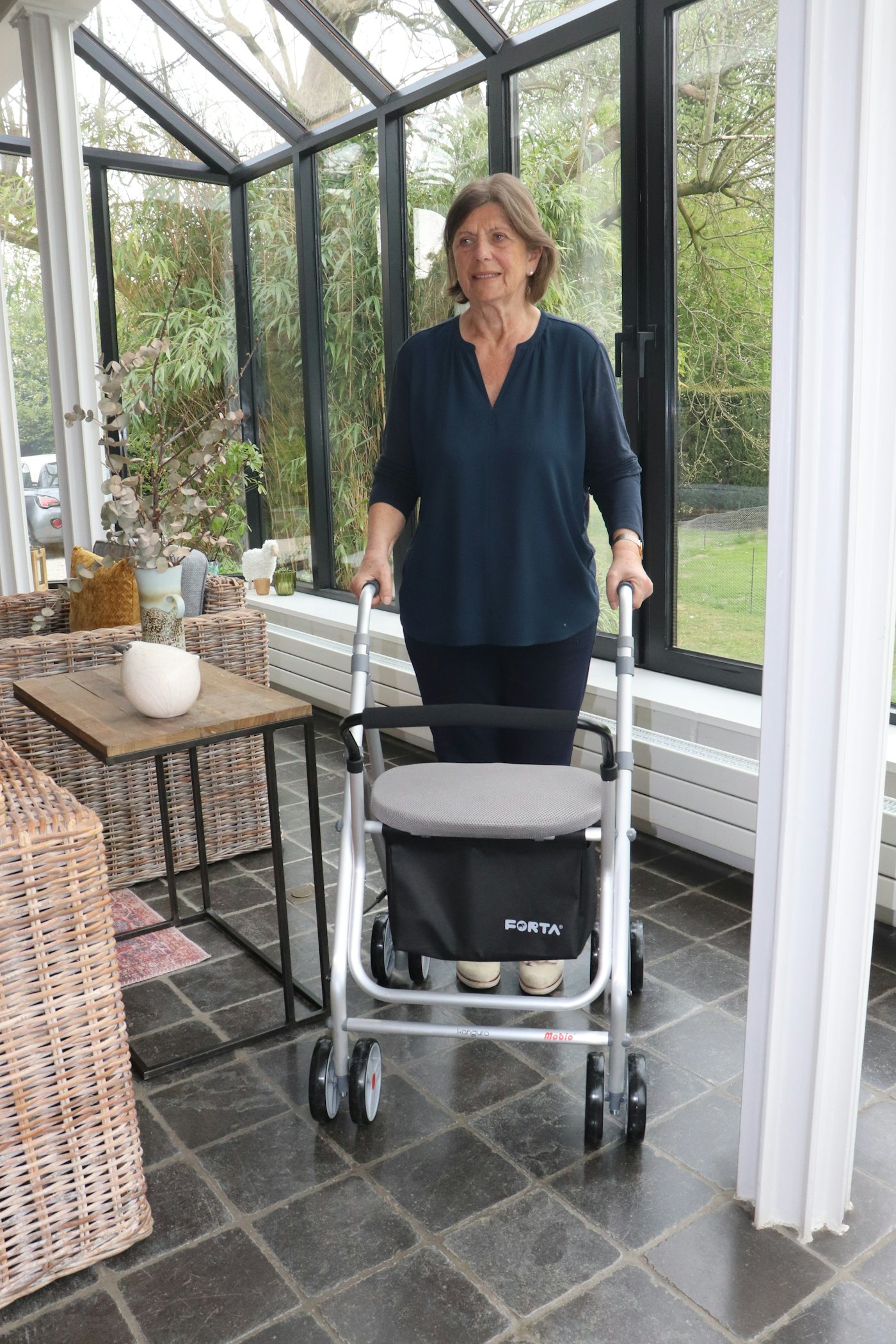
Autonomy: The Goose navigates on its own using onboard sensors and the tags on your walker. It does not use remote operators to drive it. Exact autonomy level and specifications will be published before launch.
Questions
What homes does it work in?
Standard residential layouts — apartments, single-family homes, single-floor living. We'll publish specific room and floor requirements before launch.
Who is the Goose for?
Older adults who use a walker or rollator and want to stay independent at home — and the families who want peace of mind without taking over.
When can I get one, and what will it cost?
The Goose is pre-launch, arriving 2027. We'll publish pricing before launch; the comparison to hold onto is simple — a fraction of a single night with an aide. Join the waitlist and we'll be in touch as early access opens; waitlist members get purchasing priority.
Early access
Be among the first families to try the Goose.
We're building the Goose with a small group of early families and older adults, ahead of a 2027 launch. Join the waitlist and we'll be in touch as it gets closer. Waitlist members get purchasing priority at launch. No payment, no commitment.
Prefer to talk to a person? Call us at (415) 562-6075, weekdays 9am–5pm PT.
No spam. Unsubscribe any time.
Prefer to talk to a person? Call us at (415) 562-6075, weekdays 9am–5pm PT.